AI Collapses the Clock Grid Security Was Built On
An AI-reconstructed exploit chain against industrial controllers in 28 minutes breaks the dwell-time assumption baked into IEC 62443 and NERC CIP risk ratings.
An AI-reconstructed exploit chain against industrial controllers in 28 minutes breaks the dwell-time assumption baked into IEC 62443 and NERC CIP risk ratings.

As AI agents start acting across ERP, MES and quality systems, the decision regulated manufacturers face is about approval authority and audit trails, not model capability.

MathWorks' TÜV SÜD-certified guidance for agentic AI in engineering workflows previews how manufacturers will have to govern AI coding agents in safety-critical systems.

NERC CIP-003-9's tighter vendor access controls and IEC 62443's human-authorization mandates leave little room for autonomous AI agents on the plant floor.

NERC and FERC are regulating AI as both a new grid load and a new control-system access risk, on separate tracks that rarely talk to each other.

Agentic AI is starting to coordinate decisions across procurement, maintenance, and quality, but no framework assigns decision authority at the handoff.

FERC's latest CIP audits show AI tools entering power-sector OT faster than asset registration and access controls can track them.

A fresh wave of AI and OT certifications gives manufacturers a point-in-time credential for a risk that moves daily, and regulators are starting to notice the gap.

AI-generated exploits against industrial controllers now take minutes, not weeks, breaking the patch-cycle assumptions baked into IEC 62443 risk assessments.

A federal warning on AI-generated PLC exploits shows industrial AI's safety gains and its security exposure now sit on the same infrastructure.

A new certification speed partnership lands just as EU, NERC, and IEC frameworks tighten vendor and OT security requirements that throughput alone cannot satisfy.

As factory AI moves from detection to direct equipment control, buyers need a way to tell distribution from validation before they sign.

Manufacturers integrating AI into OT environments face a single architectural choice that determines their entire safety and audit posture.

Manufacturers buying AI-driven OT security platforms are skipping the asset visibility problem that determines whether the AI works at all.
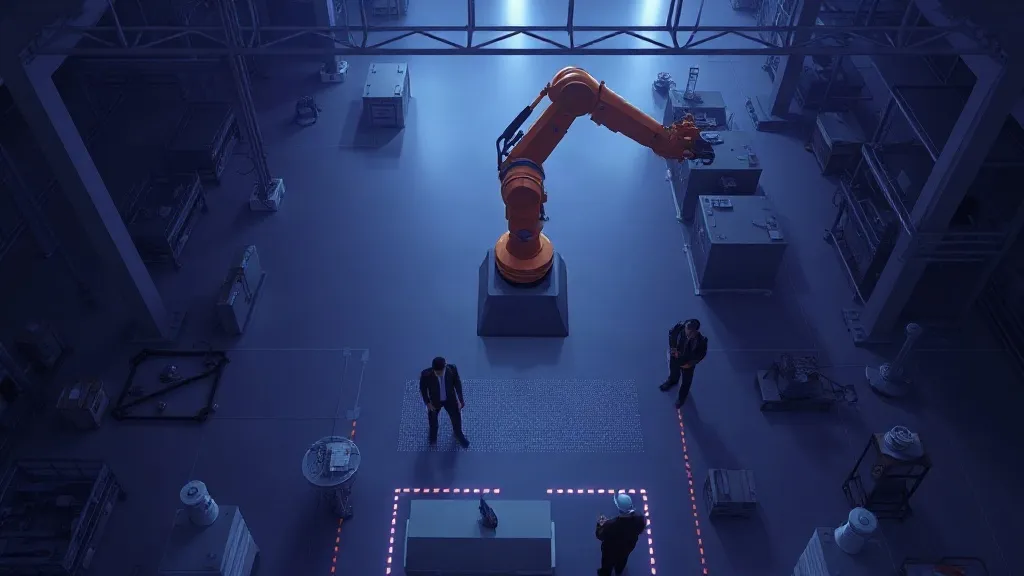
AI video analytics promises safer factory floors, but manufacturers must decide now whether its output is advisory or a safety control before a missed detection decides it for them.

Industrial AI tools are compressing automation development to days, but functional-safety and AI governance frameworks have not caught up at the same pace.

Manufacturers evaluating agentic and physical AI should test authority against consequence, not ease of approval.

IEC 62443-4-1 certification secures a robot's factory-installed software, not the third-party apps and agents manufacturers plug into its open APIs.

Role-based AI workforce certifications are multiplying alongside IEC 62443 system certifications, but nothing links a person's credential to a plant's compliance status.

Siemens and TD SYNNEX are widening distribution of physical AI and IT/OT convergence just as incident data shows the risk that convergence already carries.

Industrial AI buyers face a widening gap between a control layer that is getting real third-party certification and an AI layer that still is not.

Humanoid and mobile robots move cybersecurity into the safety case, but vendor certifications and point-in-time audits do not yet prove the case holds.
Edge AI deployments are outpacing both hardware certification and AI governance frameworks, leaving regulated buyers exposed on the half that actually controls risk.

Multi-party AI energy dispatch breaks the single-organization assumption baked into OT bounded-authority design and the standards built around it.

For energy operators buying AI grid-optimization tools, the architecture choice between vendor-owned sensors and OT data access sets the cybersecurity liability line.

A certification on one OT component says little about the AI-driven stack now built on top of it, and buyers need a stack-level map, not a better badge.

TÜV SÜD, Accenture, and NVIDIA are building a private assurance product for industrial AI while regulators and industry convene on the threats IEC 62443 can't certify.

NERC CIP and IEC 62443 both certify a moment in time, but agentic OT controllers change behavior between audits, leaving buyers with no framework for continuous assurance.

Industrial buyers deciding how to govern AI in control networks are finding the operative bar is IEC 62443 component certification, not new AI policy.

IEC 62443 certification is spreading fast across OT vendors even as practitioners warn its static assessment model can't account for agents that alter their own behavior.

Recent IEC 62443-4-2 certifications and vendor remote access rules show industrial AI's real governance gap is network security, not physical safety.

India's mandate for machine-readable product standards previews a structural shift industrial AI buyers cannot ignore: verification against static documents will not scale.

The EU's 2027 Machinery Regulation certifies AI safety functions as fixed artifacts, but adaptive models in production break that premise.

Certifying physical AI against existing machine safety and OT security standards, not model governance policy, is becoming the real gate for industrial AI deployment.

Certification bets from TÜV SÜD, Accenture, and BlackBerry are reshaping industrial AI compliance, but buyers still need to verify today's obligations against primary sources, not vendor commentary.

A new TÜV SÜD and Accenture certification scheme signals that industrial AI safety assessment, not model performance, is now the adoption bottleneck.

Bounded industrial AI like Lincoln Electric's welding system earns trust through validation, but the same physical access that makes it useful is becoming the attack surface security researchers are now probing.

Manufacturers treating physical AI certification as a completed checkbox are missing the continuous re-verification that governs whether a safety case still holds.
Omron's $675M bet on edge computing shows industrial AI vendors absorbing the compute layer, blurring the certification boundary manufacturers rely on for IEC 62443 compliance.

FERC's lessons-learned review flagged AI alongside third-party risk in CIP audits, but utilities still lack a certified way to prove what vendor AI actually does.
Manufacturers rolling out agentic AI for defect detection risk picking the tool that clears procurement fastest, not the one built for auditable authority.

Bounded-authority design and quantified loss modeling are being built by separate vendor stacks, with no shared record connecting what an AI system was allowed to do to what it actually did.

As autonomous mobile robots scale across plants and warehouses, the choice between open-source ROS and a certified commercial distribution is becoming a compliance decision, not an engineering preference.

Claroty cut OT exploit development to 28 minutes while NERC, CIP-015 tooling, and physical AI certification each address a different slice of the same exposure.

Manufacturers are racing toward AI certifications and audits while basic endpoint visibility into AI tool sprawl on OT networks remains unsolved.

As agentic AI moves onto safety-certified industrial silicon and RTOS stacks, buyers must locate exactly where the certification boundary ends and the uncertified agent begins.